Plug-in solar panels give UK households a cheaper and simpler way to generate some electricity at home. However, an 800W plug-in system is not a direct replacement for a professionally fitted rooftop solar system.
Plug-in solar can suit renters, flats and homes without a suitable roof. Rooftop solar is usually better for homeowners who want larger savings, battery storage and greater long-term energy independence.
This guide is accurate for the new plug-in solar rules taking effect on 27 August 2026. It explains how plug-in solar panels work, what they could save and when a full rooftop system from Eden Power is likely to offer better value.
What changed for plug-in solar panels in the UK in 2026?
From 27 August 2026, qualifying plug-in solar products can be sold and used under a new UK safety framework. A legal product must comply with the government’s Plug-in Solar Device Interim Product Specification and use an approved plug and microinverter.
The main points are:
- Maximum AC output is limited to 800W.
- The product must be sold as a compliant system, rather than assembled from unrelated parts.
- The solar panels must connect using the manufacturer-supplied plug.
- The current framework does not cover plug-in batteries or plug-in solar products with integrated battery storage.
- Electrical and mounting instructions still need to be followed.
- Rules in Northern Ireland differ in some areas, so local guidance should be checked.
The change makes small solar systems more accessible, but it does not mean that any solar panel bought online can be safely plugged into a household socket. The UK Government’s plug-in solar guidance explains that only products meeting the required specification qualify.
What are plug-in solar panels?
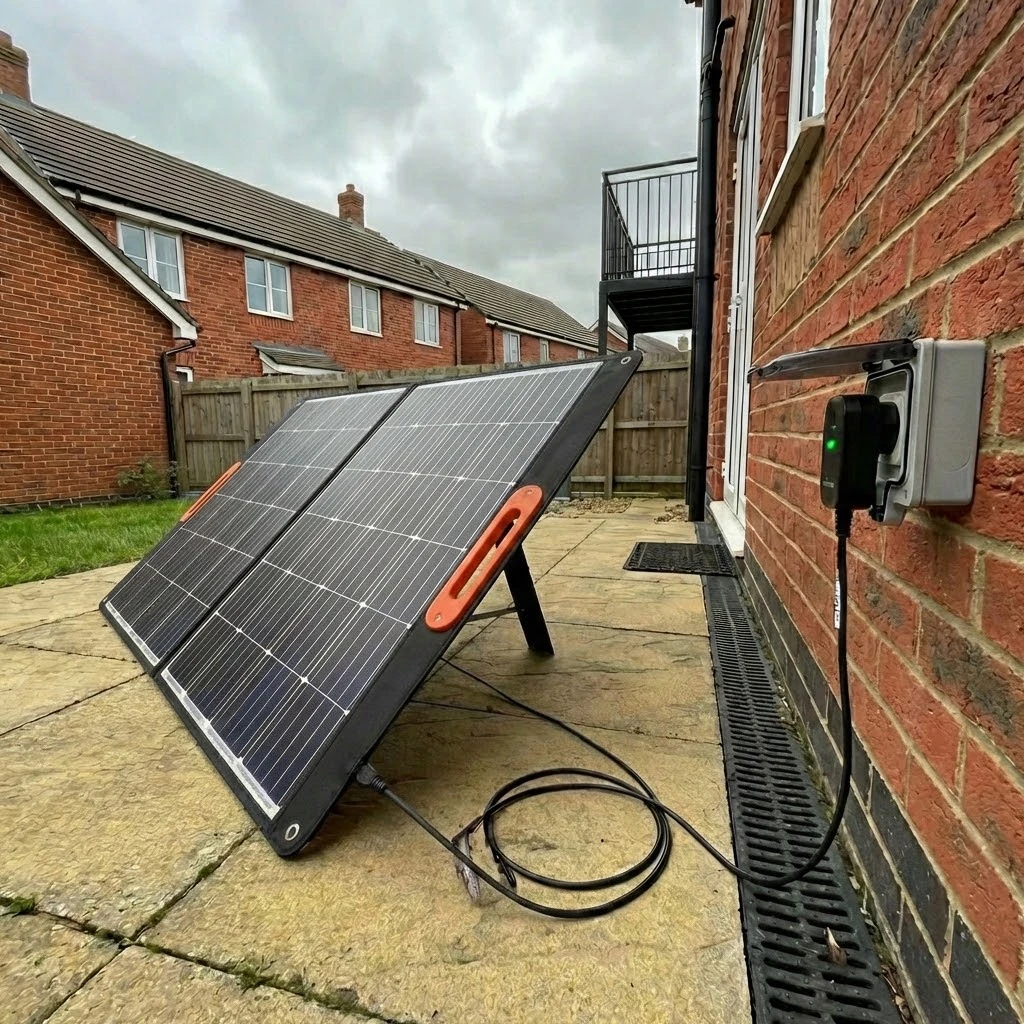
Plug-in solar panels are small solar photovoltaic systems that feed electricity into a home’s electrical circuit through a standard UK socket. A kit normally includes one or more solar panels, a microinverter, mounting equipment and a manufacturer-supplied connection lead.
The electricity is used by appliances running in the home at the same time. For example, the system may help power a fridge, router, computer or other background loads during daylight hours.
If the home uses more electricity than the panels produce, the remaining electricity still comes from the grid.
Plug-in solar is sometimes called:
- Balcony solar
- Plug-and-play solar
- Socket solar
- DIY solar
- Compact solar
The panels may be placed on a balcony, wall, shed, garage or suitable area of ground. This is subject to the product instructions, planning rules and permission from the property owner.
How much electricity can an 800W plug-in solar system generate?
An 800W plug-in solar system could produce about 378 to 690 kWh of electricity per year under the UK Government’s example scenarios.
The lower example uses vertically mounted east and west-facing panels. The higher example uses south-facing panels at a 30-degree angle with little or no shade.
The actual output depends on:
- Which direction the panels face
- The angle of the panels
- Shade from trees, buildings and balcony structures
- The location of the property
- Local weather
- How clean the panels remain
- How much electricity is used while the panels are generating
A small system on a shaded north-facing balcony could produce much less than a well-positioned system facing south. This is why panel position matters just as much as the power rating printed on the box.
How much could plug-in solar panels save?
The Department for Energy Security and Net Zero estimates that an 800W plug-in system could save around £70 to £110 per year in its two example setups.
These estimates use 2026 electricity prices and assume the household uses part of the electricity as it is generated. They do not include income from exporting electricity to the grid.
The government used an average device cost of about £500 in its modelling, although real retail prices and any additional costs will vary.
Based on a £500 purchase and annual savings of £70 to £110, the simple payback would be roughly five to seven years. This is a basic calculation, rather than a quote or guarantee. Panel position, electricity use, equipment life and future energy prices can all change the result.
Households get the most value from plug-in solar when they use electricity during daylight hours. Running a washing machine, dishwasher or home office equipment while the panels are generating can reduce the amount of electricity bought from the grid.
Plug-in solar panels or rooftop solar: which is better?
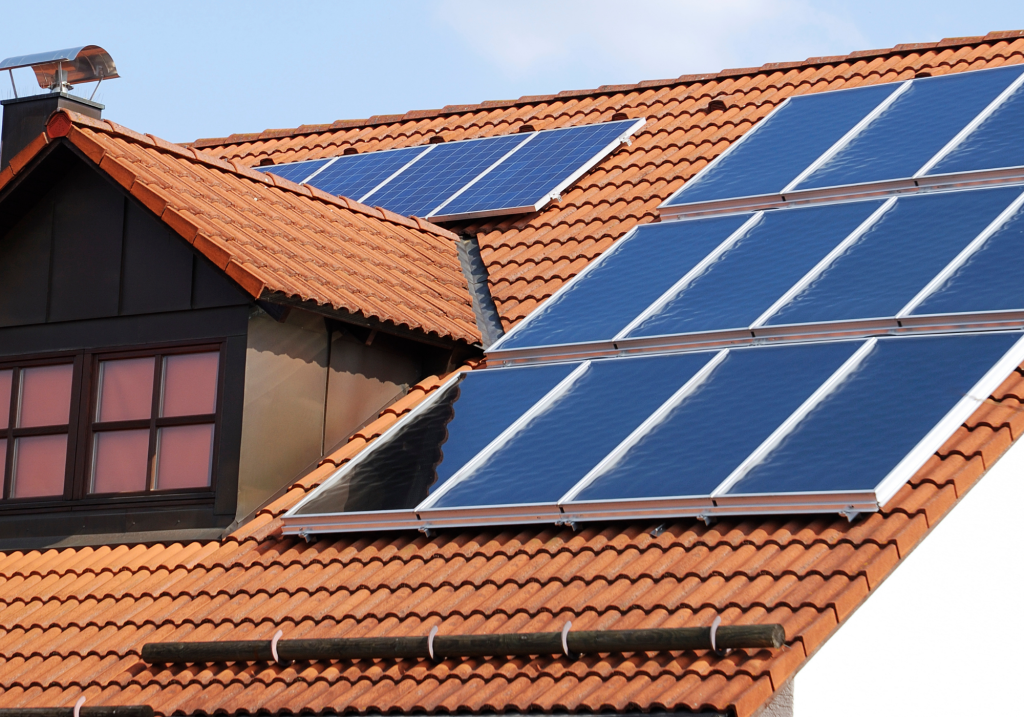
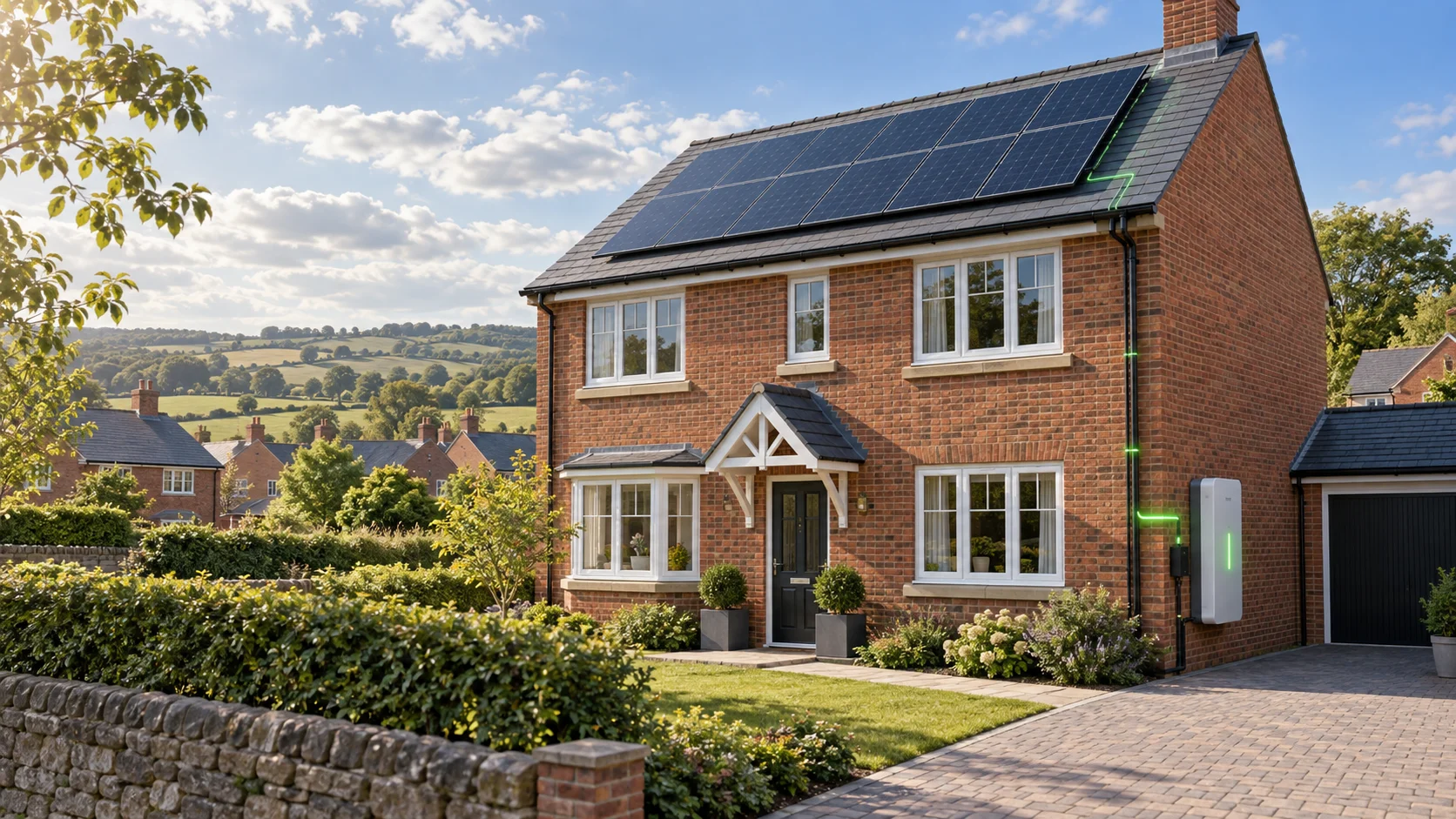
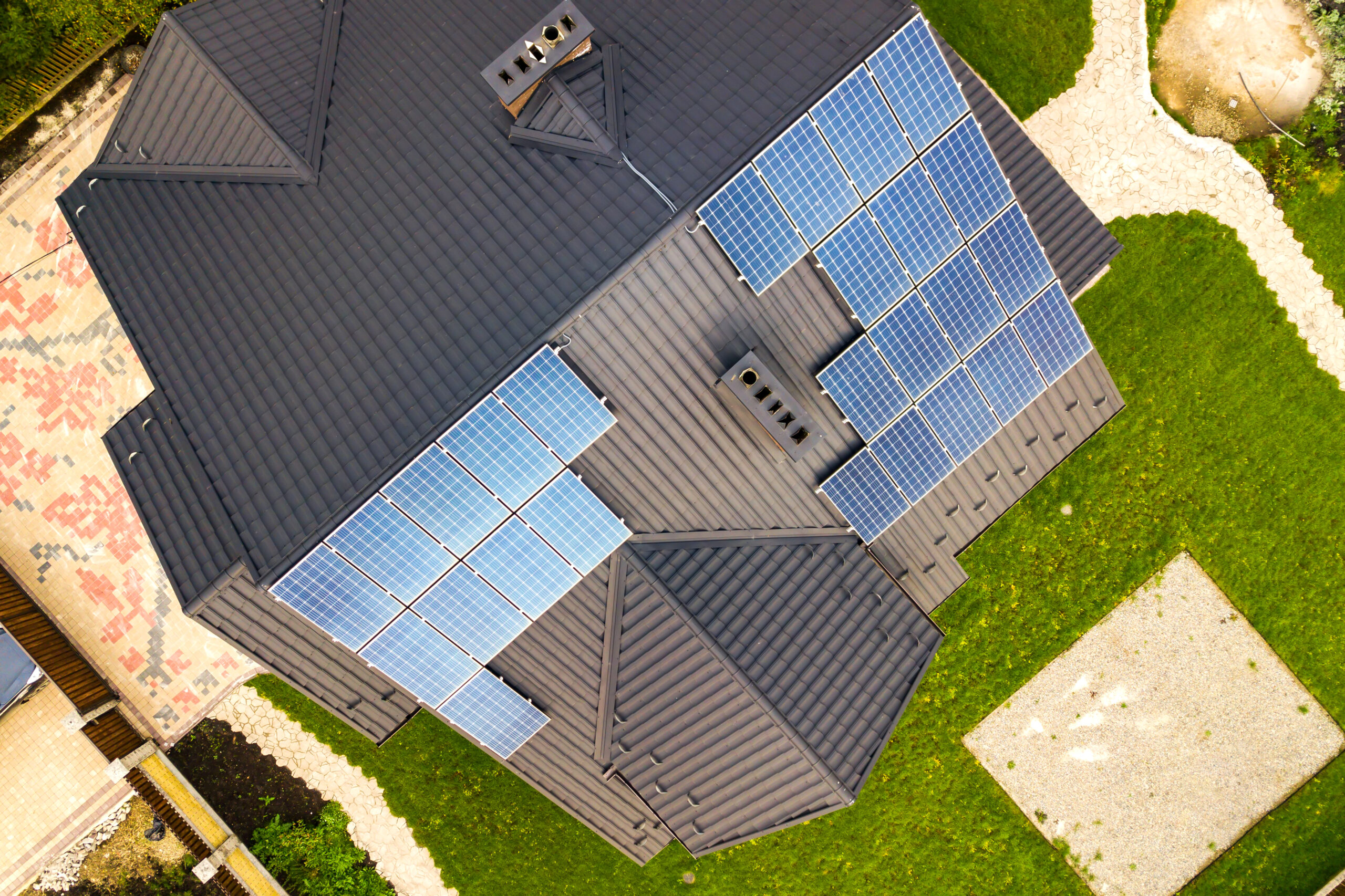
Plug-in solar is better for a low-cost entry into solar when roof access is not possible. Rooftop solar is better for homeowners who want to generate a larger share of their electricity, add battery storage and build a system around their actual energy use.
| Comparison | Plug-in solar panels | Professionally fitted rooftop solar |
|---|---|---|
| Typical system size | Up to 800W AC under the new rules | Often around 4.5 kWp for a domestic system |
| Upfront cost | Government modelling uses about £500, but retail prices vary | Around £6,100 for a typical 4.5 kWp system, according to Energy Saving Trust |
| Installation | Designed for consumer setup when the product and property are suitable | Designed and fitted by a qualified solar installer |
| Generation | Government examples show 378 to 690 kWh per year | Much higher potential output, depending on the roof, location and system design |
| Battery storage | Plug-in batteries are outside the current framework | Battery storage can be included or added to many existing systems |
| Export payments | Smart Export Guarantee eligibility is not automatic | An MCS-certified installation may qualify, subject to supplier rules |
| Best suited to | Renters, flats, small budgets and homes without usable roof space | Homeowners and businesses seeking larger long-term savings |
| Personal design | Limited to the approved kit and mounting options | Designed around the roof, electricity use, budget and future plans |
| Support | Usually provided by the retailer or manufacturer | Survey, installation, monitoring and aftercare can come from one installer |
The Energy Saving Trust says a typical domestic rooftop system is around 4.5 kWp and costs about £6,100 as of July 2026.
That is a larger investment than plug-in solar. However, a 4.5 kWp rooftop system is also more than five times the size of an 800W plug-in unit before direction, shade and other design factors are considered.
When are plug-in solar panels worth it?
Plug-in solar panels can be worth it when a household has suitable outdoor space but cannot install a full rooftop system. The lower purchase price makes small-scale solar available to more people.
Plug-in solar may suit you if:
- You rent and have written permission from your landlord.
- You live in a flat with a safe, suitable balcony.
- Your roof cannot take solar panels.
- You want to start with a smaller budget.
- You regularly use electricity during the day.
- You can position the panels with little shade.
- You are happy with modest generation rather than whole-home coverage.
Plug-in solar is less likely to suit you if the panels would be heavily shaded, you have no safe mounting area or your home’s electrical installation needs upgrading.
It may also feel limited if your main goal is to power an electric vehicle, heat pump or high-use family home.
When is rooftop solar the better choice?
Rooftop solar is usually the better choice for a homeowner with suitable roof space who wants to make a larger reduction in grid electricity use.
A professional survey can match the number of panels, inverter and battery capacity to the property’s roof and electricity demand.
A fitted rooftop system may be better if:
- You own your home and expect to stay there for several years.
- You want to generate a meaningful share of your annual electricity.
- You want battery storage for evening use.
- You may add an electric vehicle or heat pump.
- You want access to monitoring and installer aftercare.
- You want to apply for Smart Export Guarantee payments.
- Your roof has enough space for a larger system.
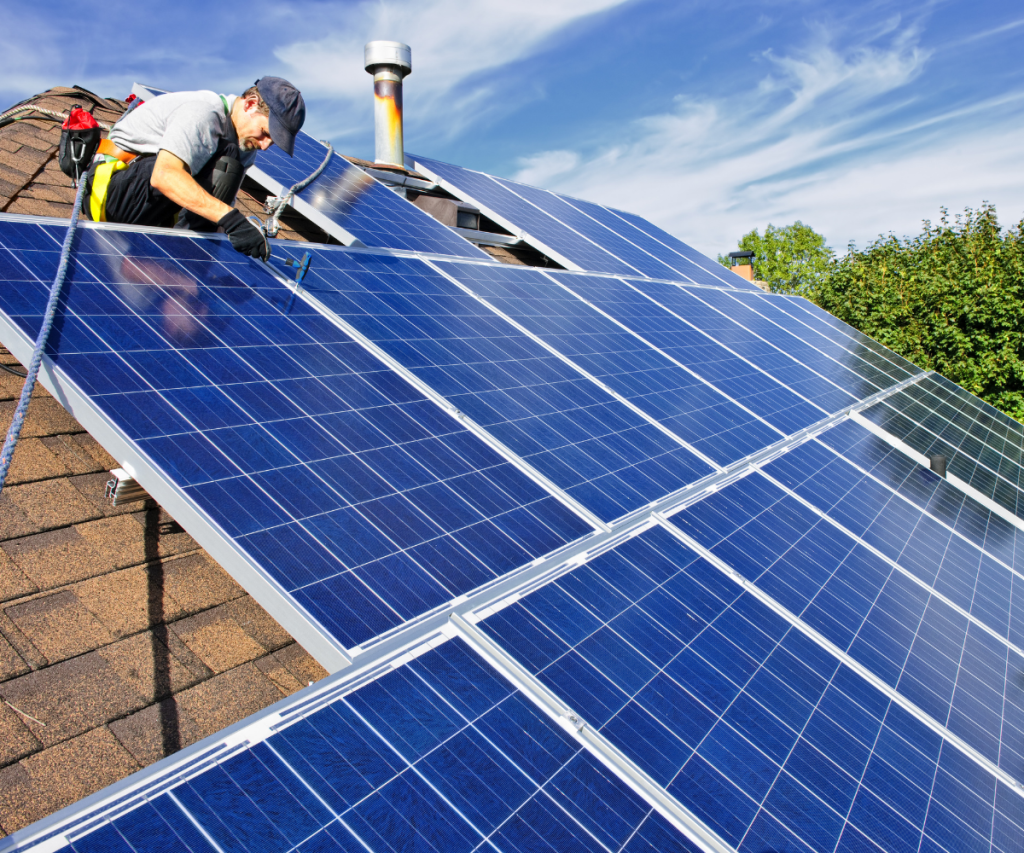
Eden Power designs and installs domestic solar panel systems for individual properties. Each system can be planned around roof direction, shade, current electricity use and future needs instead of being limited to a standard kit.
Can plug-in solar panels work with a battery?
The new plug-in solar framework does not include plug-in batteries or plug-in solar products with integrated batteries. A product should not be treated as compliant simply because an online seller describes it as plug-and-play.
A professionally installed rooftop system offers a clearer route to battery storage.
Solar batteries store surplus electricity generated during the day so it can be used later. This includes the evening, when household electricity demand often rises.
Eden Power installs solar battery storage for new and existing solar arrays. Eden Power works with GivEnergy and also offers battery-only options that can charge using cheaper night-time tariffs.
Battery storage may be useful if:
- The home is empty during much of the day.
- Evening electricity use is high.
- The solar panels produce more than the home can use at once.
- The household has a time-of-use electricity tariff.
- Backup power is part of the system design.
A battery needs to be sized properly. A battery that is too small may not store enough surplus electricity. An oversized battery may add cost without being fully used.
Can you receive Smart Export Guarantee payments with plug-in solar?
Smart Export Guarantee payments are not automatic for plug-in solar.
The government states that consumers without an MCS-accredited domestic solar installation are not entitled to Smart Export Guarantee payments in Great Britain under the standard eligibility route.
For eligible systems, the Smart Export Guarantee pays households for renewable electricity exported to the grid.
Applicants normally need:
- An eligible certified installation
- A meter capable of recording exported electricity
- An application with an SEG supplier
- The supporting system paperwork
Each supplier sets its own payment rate and conditions.
This makes self-consumption especially important for plug-in solar. A professionally installed, MCS-certified rooftop system can offer a more established route to export payments, subject to the chosen supplier’s rules.
Are plug-in solar panels safe?
Compliant plug-in solar panels are designed to meet the government’s technical and safety specification, but not every product or home is suitable.
Buyers should check the approved product details and the condition of the property’s electrical installation before connecting a system.
Electrical Safety First recommends having the electrics checked before buying, especially in older homes or when the condition of the wiring and protective devices is unknown.
Plug-in solar safety checks
- Buy a complete, compliant system from a reputable retailer.
- Use only the plug and cable supplied by the manufacturer.
- Never use an extension lead, multiway adaptor, travel adaptor or cable reel.
- Check the required RCD protection.
- Follow the mounting instructions and account for wind loads.
- Keep cables protected from damage and weather.
- Obtain landlord or freeholder permission where needed.
- Check planning requirements for listed buildings and conservation areas.
- Ask a registered electrician if you are unsure about the home’s wiring.
Cheap components from an unknown online seller are not the same as a compliant plug-in solar kit. Product approval, correct mounting and safe electrical protection all matter.
Is plug-in solar enough to power a whole home?
An 800W plug-in solar system will not normally power a whole UK home. It can reduce background grid use during daylight hours, but larger appliances may draw more power than the system produces.
A kettle alone commonly uses several times the maximum output of an 800W system. The plug-in panels can still contribute, but the grid supplies the shortfall.
At night, the plug-in system produces no electricity. The current approved framework does not include a plug-in battery to move daytime generation into the evening.
A full rooftop solar and battery system can cover a much larger part of household demand. The result still depends on the roof, panel capacity, battery size and how the household uses electricity.
Why choose Eden Power for rooftop solar and battery storage?
Eden Power is a family-run solar installer led by father and son Liam and Chris. Instead of sending a sales representative or relying only on a desktop estimate, Liam or Chris personally visits the property to carry out the survey and discuss the available options.
Eden Power provides:
- Domestic solar panel design and installation
- Commercial solar panel systems
- GivEnergy solar battery storage
- Battery upgrades for existing solar arrays
- Battery-only systems for time-of-use tariffs
- Solar panel servicing and maintenance
- System monitoring setup and ongoing support
Eden Power is MCS accredited and works across Shropshire, Shrewsbury, Ludlow, Telford, Hereford and surrounding areas.
The aim is to design a system around the property rather than sell the largest or cheapest package without checking whether it fits.
If you are comparing an 800W plug-in kit with a complete rooftop system, a proper survey can show how much usable roof space you have and what the system could generate.
Contact Eden Power for a free, no-obligation discussion about solar panels or battery storage.
Frequently asked questions about plug-in solar panels in the UK
Are plug-in solar panels legal in the UK?
Compliant plug-in solar products can be sold and used under the new rules taking effect on 27 August 2026. The product must meet the government’s Interim Product Specification, and some rules differ in Northern Ireland.
What is the maximum size of a plug-in solar system?
The maximum AC output for a qualifying plug-in solar product is 800W. The approved product may use more panel capacity on the DC side, but the microinverter cannot feed more than the permitted AC output into the home.
How much do plug-in solar panels cost in the UK?
The government’s 2026 impact assessment models an average device cost of around £500. It gives a wider European market estimate of roughly £400 to £600 for an 800W system before additional costs.
UK retail prices, mounting equipment and professional electrical work may change the final cost.How much can an 800W plug-in solar system save?
Government examples estimate annual bill savings of about £70 to £110. The result depends on direction, angle, shade, local sunlight, electricity prices and how much solar power the household uses during the day.
Do plug-in solar panels work during a power cut?
Standard grid-connected plug-in solar panels should not be assumed to power a home during a power cut. Grid-connected inverters normally shut down when the grid fails to protect engineers working on the network.
Can I connect plug-in solar panels to an extension lead?
No. Plug-in solar panels should never be connected through an extension lead, cable reel, multiway adaptor, travel adaptor or plug-in RCD adaptor. The product should connect only as directed by the manufacturer.
Do I need permission for balcony solar panels?
Renters and leaseholders should get permission from the landlord or freeholder before fitting balcony solar panels. Planning restrictions, building rules and safe structural mounting may also apply, especially for listed buildings or conservation areas.
Is rooftop solar better than plug-in solar?
Rooftop solar is usually better for homeowners who want higher generation, battery storage and an established route to Smart Export Guarantee payments. Plug-in solar can be better for renters, flats, small budgets and properties without a suitable roof.
Speak to Eden Power about the right solar system for your home
Plug-in solar panels are a useful new option, especially for people who have previously been unable to install rooftop solar. They offer a lower-cost way to reduce some daytime electricity use, but their 800W limit means expectations need to stay realistic.
If you own a suitable property and want to cut a larger share of your electricity bill, professionally fitted rooftop solar is likely to offer more room to grow. It can be designed around your home, connected to battery storage and supported by an experienced installer.
Eden Power can assess your roof, electricity use and future plans before recommending a system.
Call 07832 977 037 or contact Eden Power online to arrange a free, no-obligation conversation.