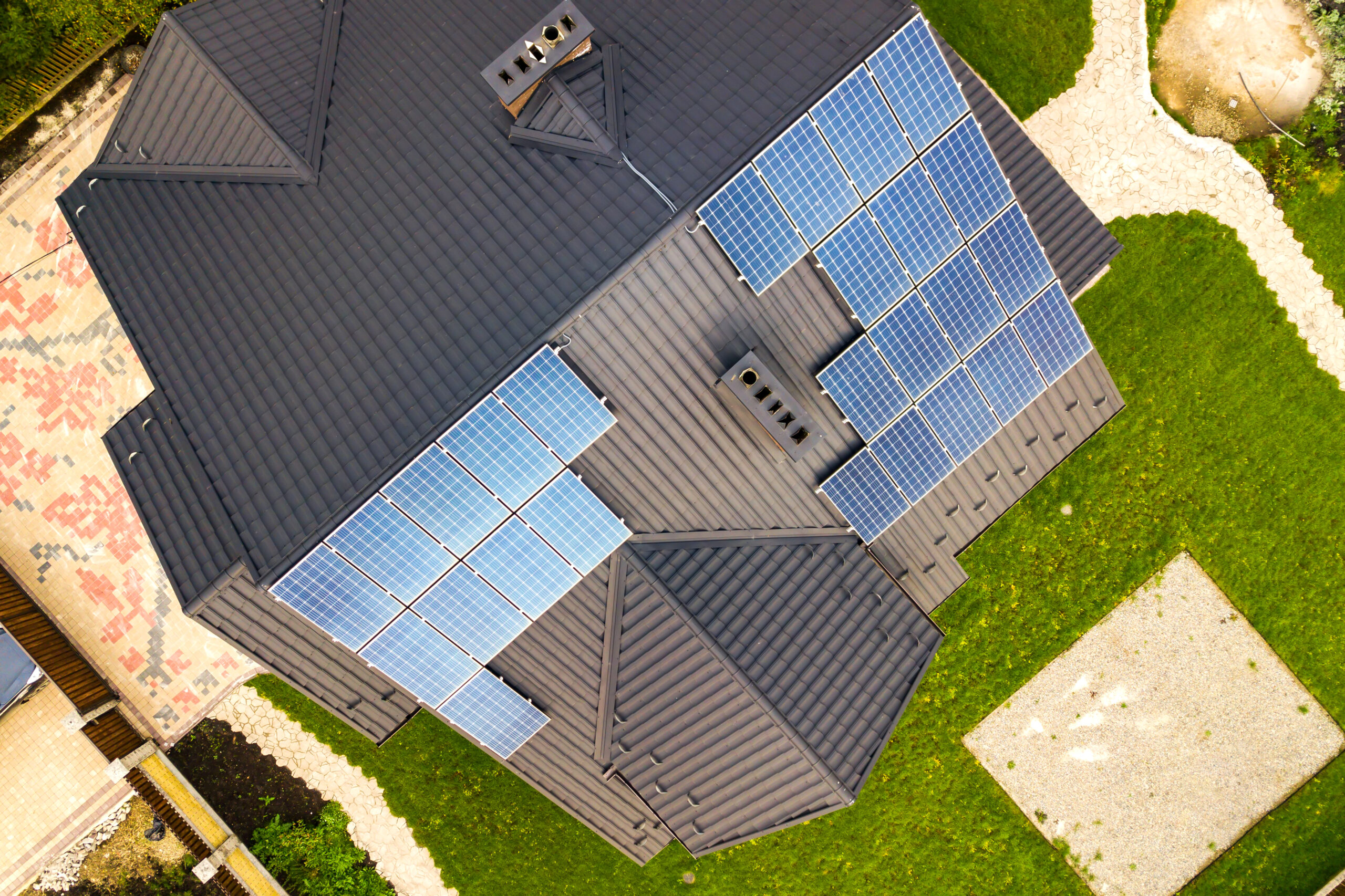
Yes, you can add a battery to existing solar panels, and for most homes in Shropshire and Herefordshire it’s one of the simplest upgrades you can make. Your panels stay on the roof, your current system keeps working, and a battery stores the power you’d normally send to the grid so you can use it in the evening instead.
This guide covers how it works, what it costs, what happens to your Feed-in Tariff, and how to pick the right size of battery.
Key takeaways
- Most homes can add a battery to existing solar panels without changing the panels or the solar inverter.
- An AC-coupled battery sits alongside your current system and is the simplest option for older installations.
- The Energy Saving Trust says battery storage tends to cost around £5,000 to £8,000.
- Battery installs on homes have 0% VAT until 31 March 2027, including batteries added to an existing system.
- Adding a battery shouldn’t affect your Feed-in Tariff, but you must tell your FiT supplier.
- Size the battery to your evening use, not the biggest one you can afford.
In this guide
Can You Add a Battery to Existing Solar Panels?
In most cases, yes. It doesn’t matter much whether your panels went up last year or back in the early days of the Feed-in Tariff. You can add a battery to existing solar panels on almost any working system.
Here’s why it’s worth doing. Without a battery, any solar power you don’t use straight away goes to the grid. The Energy Saving Trust says you’ll typically get around 12p for each unit you export through the Smart Export Guarantee, while you’d normally pay more than twice that to buy electricity. A battery lets you keep that power and use it when the sun goes down.
One of our customers, Linda, already had panels when she spoke to Chris about adding batteries. She went ahead, and says she hasn’t had a problem since they were fitted in 2019.
Signs your home is a good fit
- Your monitoring app shows you export a lot of power in the middle of the day.
- Your home is empty during the day and busy in the evening.
- You use a lot of electricity after dark, for cooking, washing or charging an electric car.
- You’d like some backup power if there’s a power cut.
- You want to use a cheaper overnight tariff to charge the battery in winter.
How Adding a Battery to Existing Solar Panels Works
There are two ways to add a battery to existing solar panels. The names sound technical, but the idea is simple.
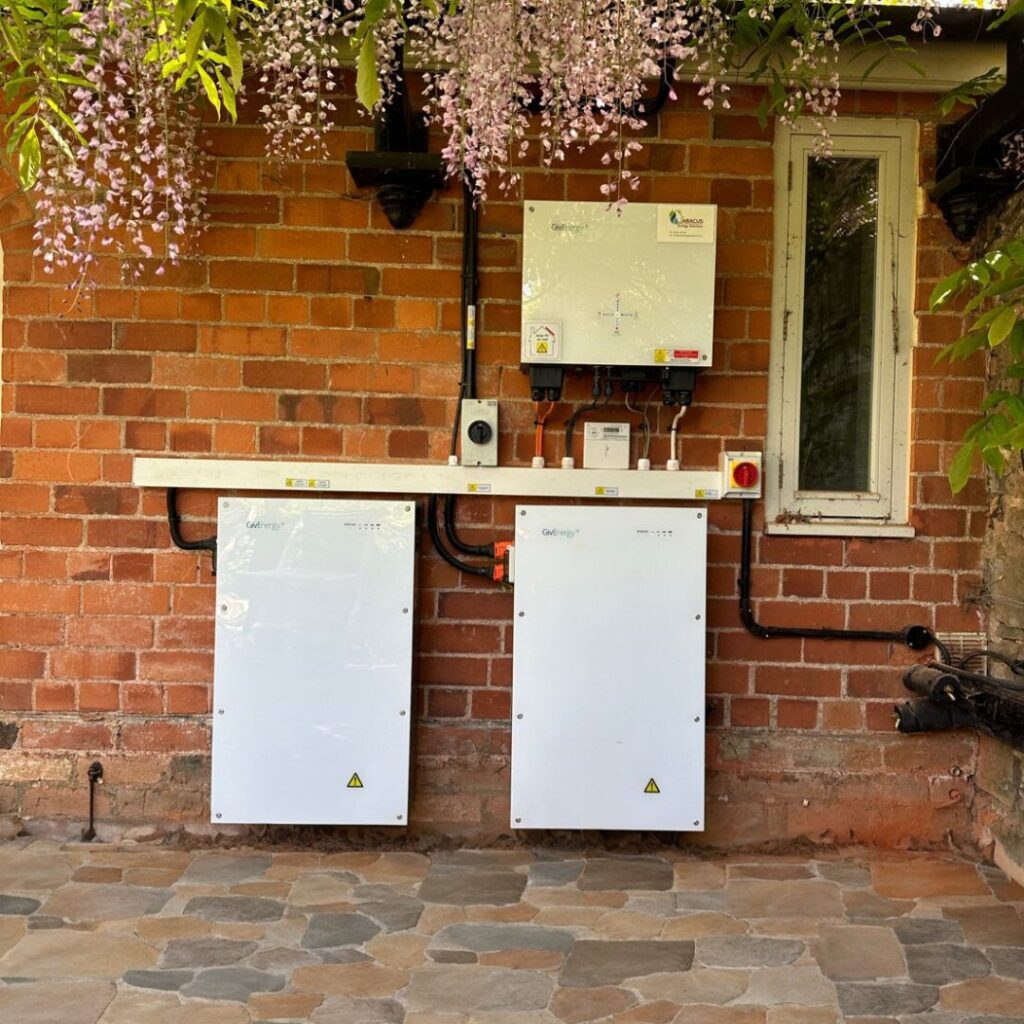
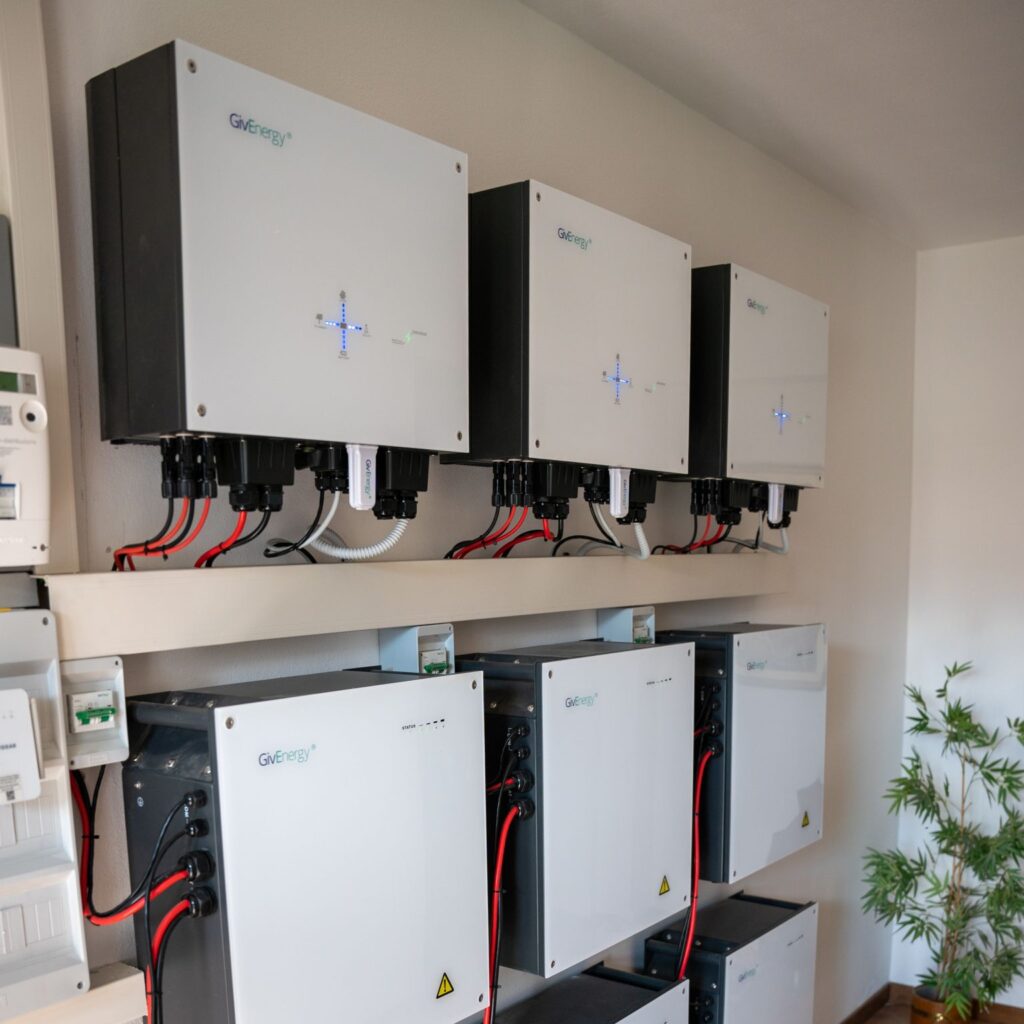
AC coupling adds a battery with its own small inverter. Your panels and your current solar inverter carry on exactly as before. When your home isn’t using all the solar power, the battery takes the spare and stores it.
DC coupling means taking out your solar inverter and replacing it with a hybrid inverter that runs both the panels and the battery. It can be slightly more efficient, but it’s a bigger job and changes the part of the system that’s already working.
| AC-coupled battery | DC-coupled battery | |
|---|---|---|
| Keeps your current solar inverter | Yes | No, it’s replaced with a hybrid inverter |
| Changes to your existing system | Very few | More |
| Works with older systems | Yes, with almost any make | Depends on the system |
| Best for | Adding storage to panels you already have | New installations, where panels and battery go in together |
When you add a battery to existing solar panels, AC coupling is usually the simplest choice. We fit GivEnergy AC-coupled batteries, like the one in our Ludlow case study, and we’re approved GivEnergy installers.
What gets fitted
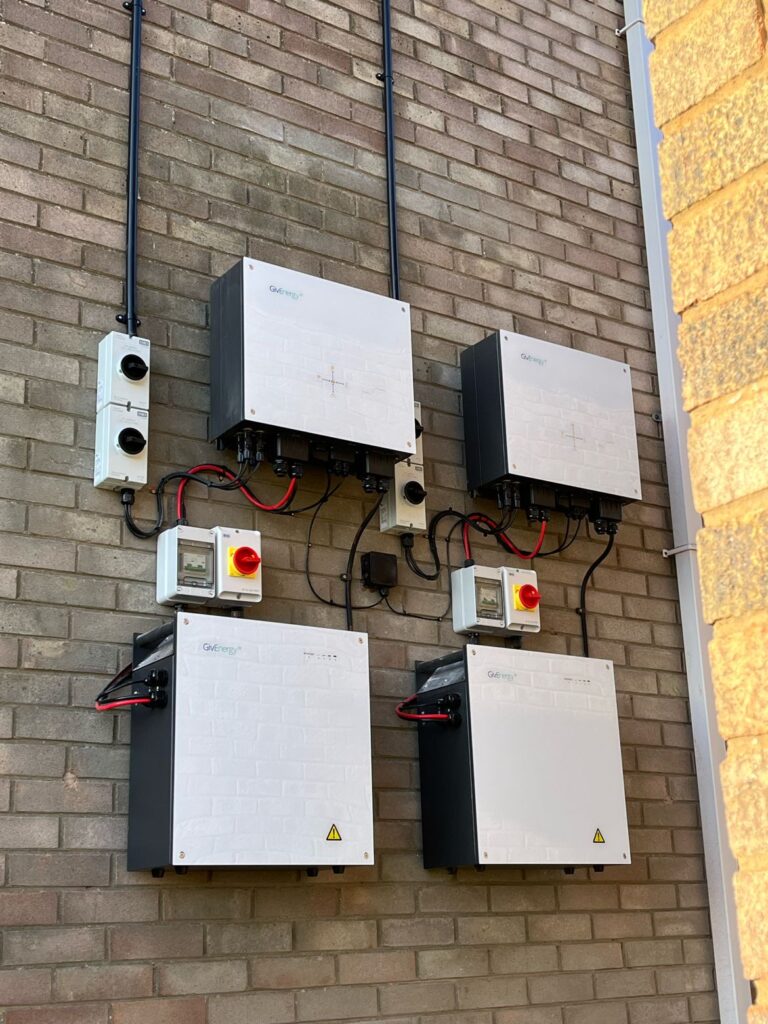
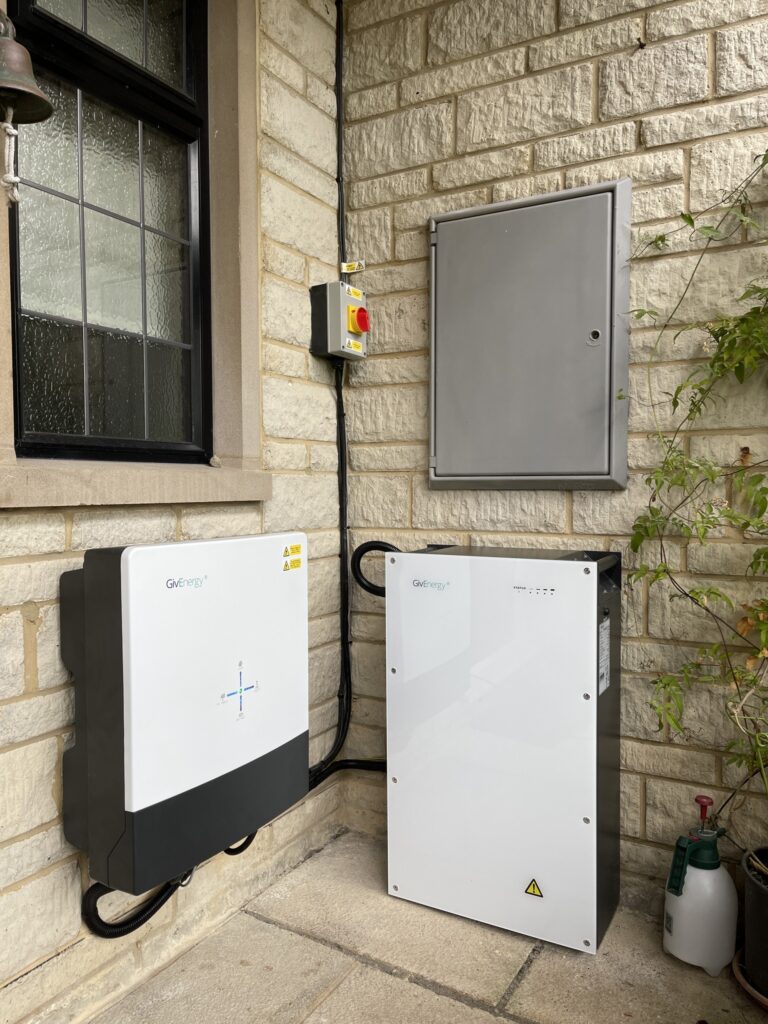
- A battery, mounted on a wall or standing on the floor in a garage, utility room or outside.
- A battery inverter, which charges and empties the battery.
- A small sensor that tells the battery when your home is importing or exporting power.
- A monitoring app, so you can see what your panels, battery and home are doing.
For more on how the stored power flows around your home, read how solar battery storage powers your home and your wallet.
What It Costs to Add a Battery to Existing Solar Panels
The Energy Saving Trust says battery storage tends to cost around £5,000 to £8,000. The cost to add a battery to existing solar panels on your home depends on a few things.
| What affects the price | Why it matters |
|---|---|
| Battery size | More storage (measured in kWh) costs more. |
| Number of batteries | Some systems let you stack extra batteries now or later. |
| Where it goes | Longer cable runs from your fuse box take more time. |
| Backup power | An emergency power supply (EPS) feature may add to the cost. |
| Network approval | Larger combined systems need approval from your network company first. |
0% VAT on a retrofit battery
Since 1 February 2024, adding a battery to existing solar panels on a home has qualified for 0% VAT, as long as a professional installs it. HMRC’s VAT Notice 708/6 says the zero rate runs until 31 March 2027, then moves to 5%. If you’ve been thinking about a battery, that’s a good reason not to leave it too long.
How much could a battery save you?
Every unit you store and use yourself is a unit you don’t buy from the grid. Because buying power usually costs more than twice what you get for exporting it, the gap soon adds up. Your savings depend on how much you export now and how much you use in the evening. Our guide to how much solar panels actually save you explains the numbers, and we’ll give you a personal estimate when we visit.
Want to know if a battery would pay off for you? Call Chris or Liam on 07832 977 037 or send us a message. We don’t use sales staff, so you’ll talk to the person who would fit it.
Will a Battery Affect Your Feed-in Tariff?
If you’re on the Feed-in Tariff, this is probably your first question. The short answer is that your payments are safe as long as the system is fitted properly.
Ofgem says that as long as your generation (and your export, if it’s metered) can still be measured accurately, your payments won’t be affected. Ofgem also says you must tell your FiT supplier when battery storage is connected to your system.
| Your situation | What to expect | What to do |
|---|---|---|
| FiT with deemed export | Generation payments carry on as normal | Tell your FiT supplier before or soon after fitting |
| FiT with metered export | Your supplier may need to check how export is measured | Speak to your FiT supplier before fitting |
| Smart Export Guarantee only | You’ll export less, so export payments will drop | Check your export tariff still suits you |
| No export tariff | Nothing changes, you just waste less power | Consider signing up for one |
When we add a battery to existing solar panels, we wire it so your generation meter keeps recording only what your panels produce, and give you the details your supplier needs.
What Size Battery Do You Need?
Bigger isn’t always better. A battery that never fills up is money sitting on the wall. The right size depends on:
- How much power your panels export on a typical day.
- How much electricity you use between late afternoon and bedtime.
- Whether you want to charge from a cheap overnight tariff in winter.
- Whether you plan to add an electric car or heat pump in future.
Our guide to average electricity usage in the UK is a useful starting point. Remember that your panels make much less power in winter, which we cover in do solar panels work in the winter. Many systems let you add another battery later, so you can start smaller and grow.
Battery or Hot Water Diverter?
A battery isn’t the only way to use more of your own solar power. A hot water diverter, such as an iBoost, sends spare solar power to your immersion heater instead of the grid. Several of our customers have both.
| Battery | Hot water diverter | |
|---|---|---|
| What it does | Stores spare power for later | Heats your hot water tank with spare power |
| Upfront cost | Higher | Much lower |
| Powers lights and appliances in the evening | Yes | No |
| Needs a hot water cylinder | No | Yes |
| Can charge from a cheap night tariff | Yes | No |
How to Add a Battery to Existing Solar Panels, Step by Step
- Check your system. Find your MCS certificate and note the size of your system, the make of your inverter and any Feed-in Tariff details.
- Look at your usage. Your monitoring app and electricity bills show how much you export and how much you use in the evening.
- Book a home visit. Chris or Liam will look at your system, fuse box and where the battery could go.
- Get your quote. We’ll recommend a battery size and give you a clear written quote with no pushy sales.
- Network paperwork. If your combined system is over 3.68kW, we apply to your network company before fitting. Smaller systems can be fitted first.
- Fitting day. We fit the battery, battery inverter and sensor. Most installs take one to two days.
- Set-up and handover. We connect your app, test everything and show you how it works, then send the final paperwork.
The network rules come from MCS guidance on notifying DNOs. Smaller systems must be notified within 28 days of switching on, and we handle that for you.

Adding a Battery to Existing Solar Panels in Shropshire
Eden Power Ltd is a family-run business on Corve Street in Ludlow, run by father and son Chris and Liam. We don’t employ sales staff or do desktop surveys. One of us will visit, look at your system and give you honest advice. Find out more about us.
Eden Power Limited are a fully accredited member of the Microgeneration Certification Scheme (MCS), and all of our staff are MCS accredited. We are part of the Renewable Energy Consumer Code (RECC), which includes the Quality Assured National Warranties (QANW) scheme to protect any money you pay us up front. We are also part of the NAPIT MCS body and are approved GivEnergy installers.
Our customers often come back for more. Mike added a third battery to his system, and it was fitted and working the same week he asked. Mel had batteries fitted to her existing panels, and when a problem came up that winter, we put it right at our own cost.
We fit batteries in Shrewsbury, Ludlow, Telford, Hereford and across Shropshire. As well as homes, we work on commercial solar panels and battery storage for farms and businesses. See our solar battery storage page, our case studies, or our guide to whether solar battery storage in Shropshire is a good investment.

Adding a Battery to Existing Solar Panels: FAQs
Can I add a battery to existing solar panels?
Yes. Most working solar systems can have a battery added, whatever their age. An AC-coupled battery sits alongside your current system, so your panels and solar inverter stay as they are.
How much does it cost to add a battery to existing solar panels?
The Energy Saving Trust says battery storage tends to cost around £5,000 to £8,000. The price depends on battery size, where it goes and whether you want backup power. We’ll give you a clear written quote after visiting.
Do I need a new inverter to add a battery to existing solar panels?
Not usually. An AC-coupled battery comes with its own battery inverter and works alongside the solar inverter you already have.
Will adding a battery affect my Feed-in Tariff?
Ofgem says your payments won’t be affected as long as your generation can still be measured accurately. You must tell your FiT supplier when a battery is connected, and we’ll give you the details they need.
Is there VAT on a battery added to my solar system?
Not at the moment. Batteries installed in homes, including those added to an existing system, have 0% VAT until 31 March 2027. After that, the rate is due to move to 5%.
How long does it take to fit a battery?
Most battery installs take one to two days, depending on the size of the system and your home. Larger systems may need network approval first, which can add time before fitting day.
Will a battery keep my power on in a power cut?
Only if your system has an emergency power supply (EPS) feature. Without it, the system usually switches off during a power cut for safety. Let us know if backup power matters to you.
How long do solar batteries last?
Most modern batteries last between 10 and 15 years, depending on how often they charge and empty. They also come with performance warranties for peace of mind.
Can I add a battery if another company fitted my panels?
Yes. We can add a battery to existing solar panels even if we didn’t originally install them. We’ll check your panels, inverter and paperwork first to make sure the battery is a good match.
Can I add more batteries later?
With many systems, yes. Some of our customers have started with one battery and added more later on.
Talk to Chris and Liam About a Battery
If you’re sending spare solar power to the grid every day, a battery could help you keep it. Get in touch and we’ll tell you honestly whether it makes sense to add a battery to existing solar panels on your home, and what size would suit you.
- Call us: 07832 977 037
- Email us: info@edenpowerltd.co.uk
- Get a free quote online: fill in our contact form