Solar panels are one of the most recognisable forms of renewable energy technology in the UK. From rooftops across Britain, to sprawling solar farms; PV (photovoltaic) systems are helping homeowners and businesses to generate clean electricity and lower their reliance on grid-supplied power.
But how exactly do solar panels work?
In short, solar panels absorb energy from daylight and convert it into electricity that can be used on your property. This can then power anything that uses electricity in your home including appliances, lighting and home heating systems.
In this complete guide, we’ll break down how solar panels work, what happens to the electricity they produce, and why solar remains one of the best forms of renewable energy technology available today.
What Are Solar Panels?
Solar panels are sometimes referred to as PV panels (photovoltaic panels). They’re designed to absorb sunlight and convert it into electricity.
PV panels are made up of solar cells which generate power when exposed to sunlight. These cells are usually made from silicon which is known for its ability to absorb energy from light.
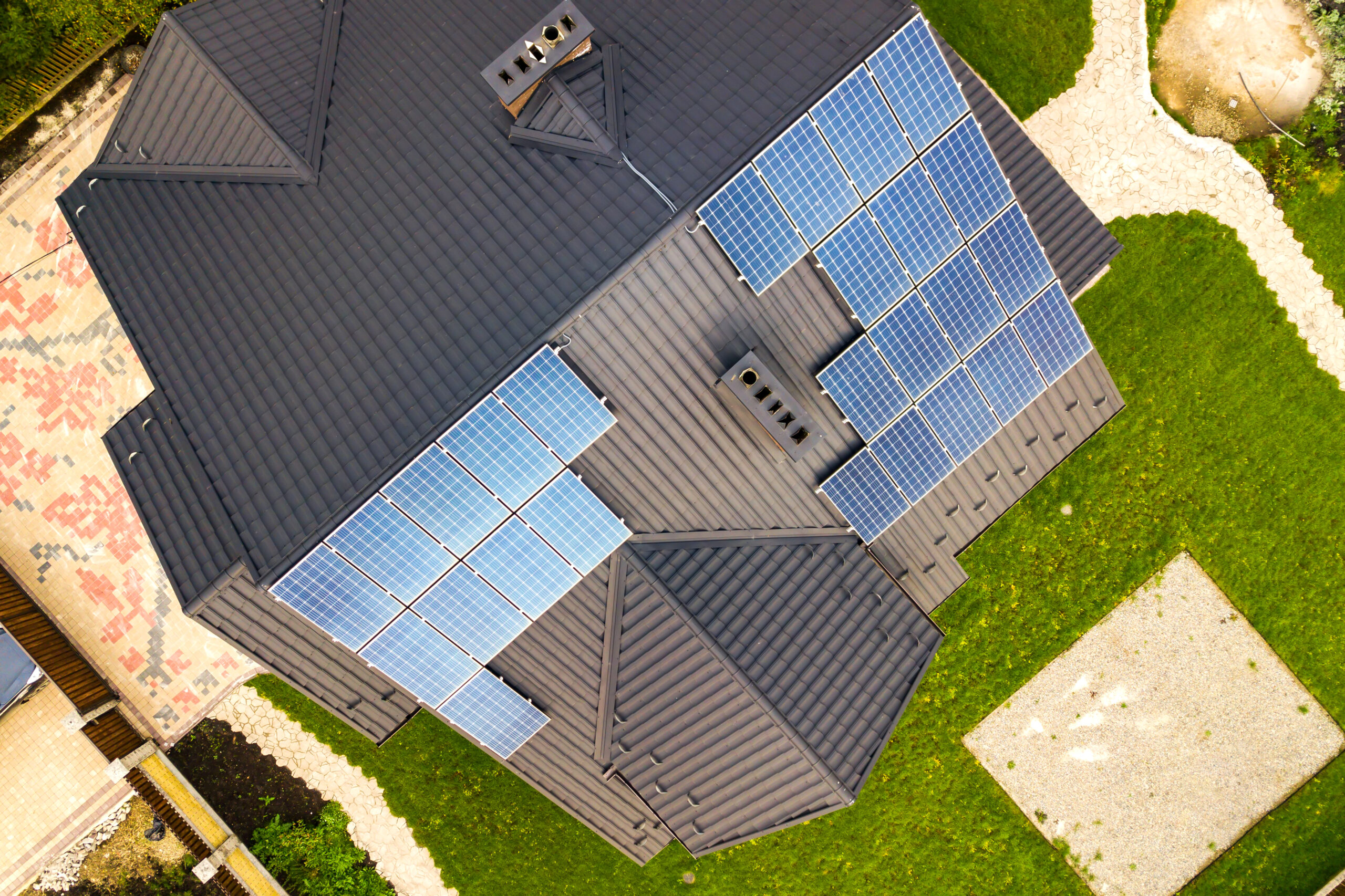
Solar panels are typically installed on rooftops so they can absorb as much daylight as possible. They can also be found on commercial buildings, farmland, and solar farms.
How Do Solar Panels Produce Electricity?
Solar panels work by producing electricity from sunlight. This is known as the ‘photovoltaic effect’.
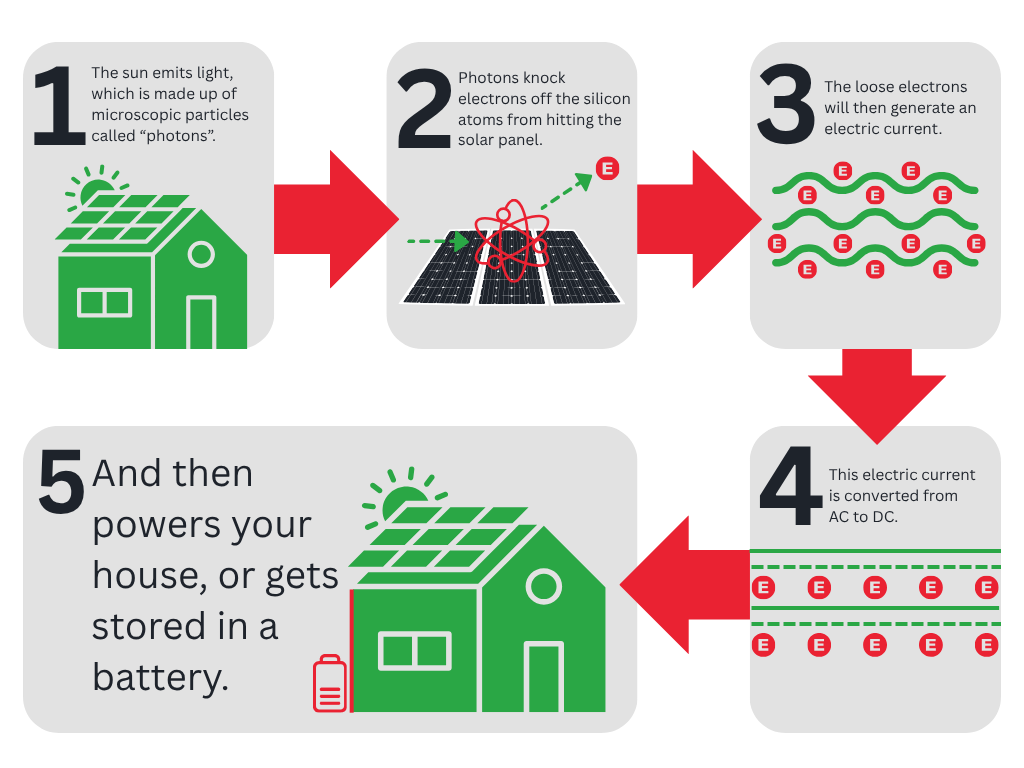
When light hits a solar panel, particles of light called photons hit the silicon cells. This energy allows electrons within the cells to become energised and move freely. When this happens, an electrical current is produced.
Essentially, the sun’s rays are turned into electricity. And because there are no moving parts in solar panels, the process is completely silent.
Here’s what happens when your solar panels produce electricity:
- Sunlight hits your solar panels
Solar panels soak up daylight for as long as there’s light outside. They don’t need to be hot to your touch in order to work, so your panels will still generate electricity on cloudy days too.
- Photovoltaic cells create DC electricity
When sunlight hits the electrons in the silicon cells, DC (Direct Current) electricity is produced.
- The inverter converts electricity
Most homes and businesses use AC (Alternating Current) electricity, rather than DC electricity. That’s where your inverter comes in.
The inverter converts DC electricity into AC electricity that can be used on your property.
- Your property uses the solar electricity
AC electricity can then be used to power electrical devices and appliances around your home or business. Things like:
- Lighting
- Fridges
- Televisions
- Computers
- Washing machines
- EV Chargers
And so on. You can use electricity as normal and the solar panels will do the rest.
- Excess electricity is exported/storage
During certain times of year, your solar panels will likely generate more electricity than you use.
When this happens, you can either export electricity back to the grid or store it in a solar battery.
Under the Smart Export Guarantee (SEG), you could also receive payments for exporting electricity to the National Grid.
What Is a Solar Inverter?
The solar inverter is often referred to as the ‘heart’ of a solar PV system. Without it, you wouldn’t be able to use the electricity that your solar panels produce.
This is because the inverter converts DC electricity into AC electricity. Most household appliances run on AC electricity, which means they can’t use DC electricity directly from your solar panels.
Solar PV systems can use:
- A single string inverter which powers the whole system
- Microinverters which are installed on each individual panel
- Hybrid inverters which combine solar with battery storage
Does Solar Work on Cloudy Days?
Yes, solar panels work on cloudy days.
There’s a common misconception that solar panels can only produce electricity when it’s sunny. In fact, solar panels don’t actually generate electricity from heat. They produce electricity from daylight.
As long as there’s light, your solar panels will work, even if it is cloudy outside.
Do Solar Panels Produce Power at Night?
No, solar panels can’t produce electricity when it’s dark outside.
If you need electricity at night, you’ll either be pulled from the National Grid or supplied by a solar battery.
Do Solar Panels Still Work in the Winter?
Yes, solar panels work in winter.
You might notice that your panels don’t produce quite as much electricity during winter. This is usually because there aren’t as many daylight hours in the winter.
What Is a Solar Battery?
A solar battery stores excess electricity generated by your solar panels.
Rather than sending excess electricity back to your energy supplier, a solar battery allows you to store it and use it later on.
Solar batteries can help you:
- Become more energy independent
- Reduce your reliance on the grid
- Save more money on your electricity bills
- Make better use of your solar energy
What Is a Solar Farm?
Solar farms are large-scale solar panel installations.
Often made up of thousands of solar panels, solar farms can span over large plots of land. Solar farms work the exact same way as regular solar panels systems by producing electricity through PV technology.
The main difference is the scale of the operation.
Solar farms supply electricity to businesses, local communities, and the electricity grid.
Why Is Solar Energy Important?
Going greener has never been more important. With the UK committed to reaching net-zero carbon emissions by 2050, renewable technologies like solar energy are more important than ever.
Solar energy can help you:
- Lower energy bills
- Generate electricity without carbon emissions
- Become more energy independent
- Invest in long-term solutions
Solar panels are known to last 25+ years and will continue to generate electricity for your home during this time.
Solar Panel Facts for Kids
Solar energy is such a cool form of renewable energy, we’ve even compiled a list of solar panel facts for kids.
Did you know;
- The sun emits more energy in one hour than the entire world uses in a year
- Solar panels can still generate electricity on cloudy days
- Solar panels typically last 25 years or more
- The calculators we used at school were often powered by solar energy
- The International Space Station is powered by giant solar panels
- There is more than enough solar energy to power the world
- Large solar farms are made up of thousands of solar panels
- Solar panels don’t need fuel to generate energy
- Silicon, which is used in most solar panels, is the second most abundant element on Earth
- By using solar energy, you’re helping to support a cleaner, greener planet
Helping kids to learn about solar energy is a great way to teach them about renewable energy and how it can protect our planet.
Why Choose Us
At Eden Power, we help homeowners and businesses experience the benefits of renewable energy for themselves. Our fully accredited solar engineers design and install high-quality solar PV systems to help our customers save on energy bills, save carbon, and become more energy independent.
No matter your needs or experience with solar panels, we’re here to help guide you through the process and help you make the best decision for your home or business.
Get Started With Solar Today
Solar panels are an established and reliable form of renewable energy technology.
Thanks to our in-depth guide, you should now have a better understanding of how solar panels work. Property owners across the UK are going solar to start generating their own clean electricity, and you can too.
If you’d like to learn more about solar panel installations, get in touch with Eden Power today.