Many homeowners and businesses looking into renewable energy options think solar panels won’t be suitable if they have a flat roof. The good news is that flat roof solar panels can still work very well if installed properly.
Flat roofs have several advantages for solar including flexible panel positioning, easier maintenance access and a more discreet appearance. From home extensions and garages, to offices and commercial premises, flat roofs still provide a great location for solar panels.
In this guide, we’ll cover exactly how solar panels can work on flat roofs, and what you need to know before going ahead with installation.
Can Solar Panels Be Installed on Flat Roofs?
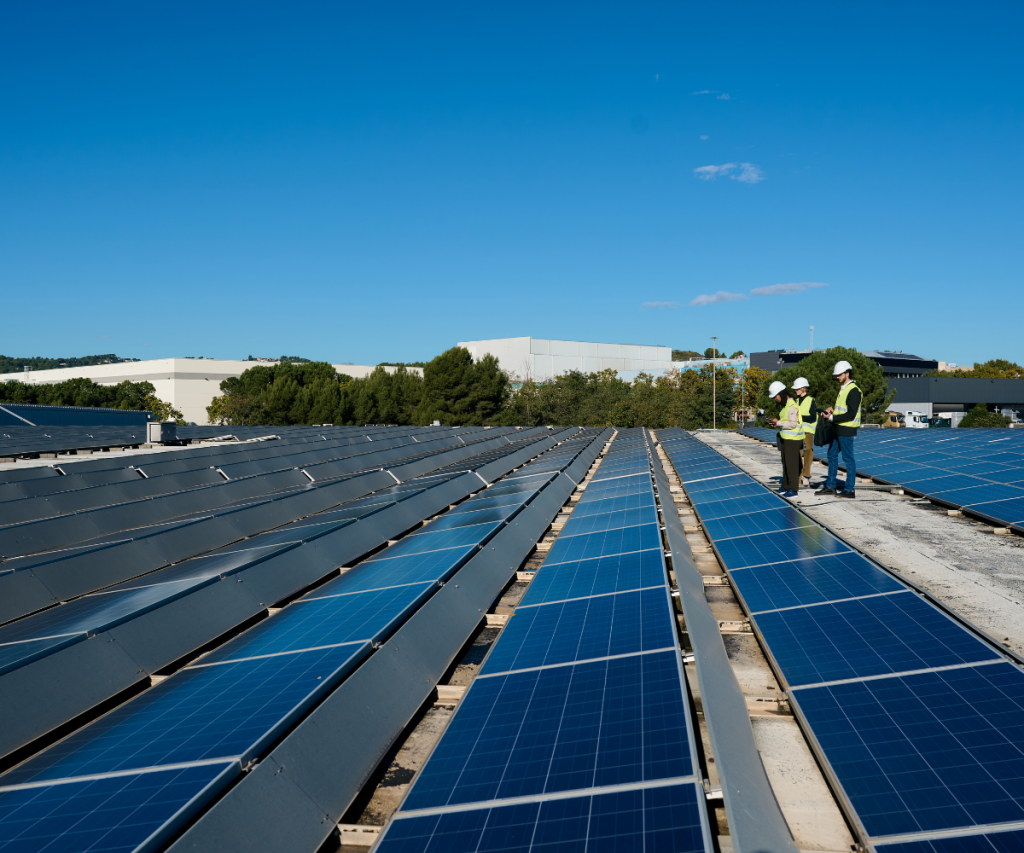
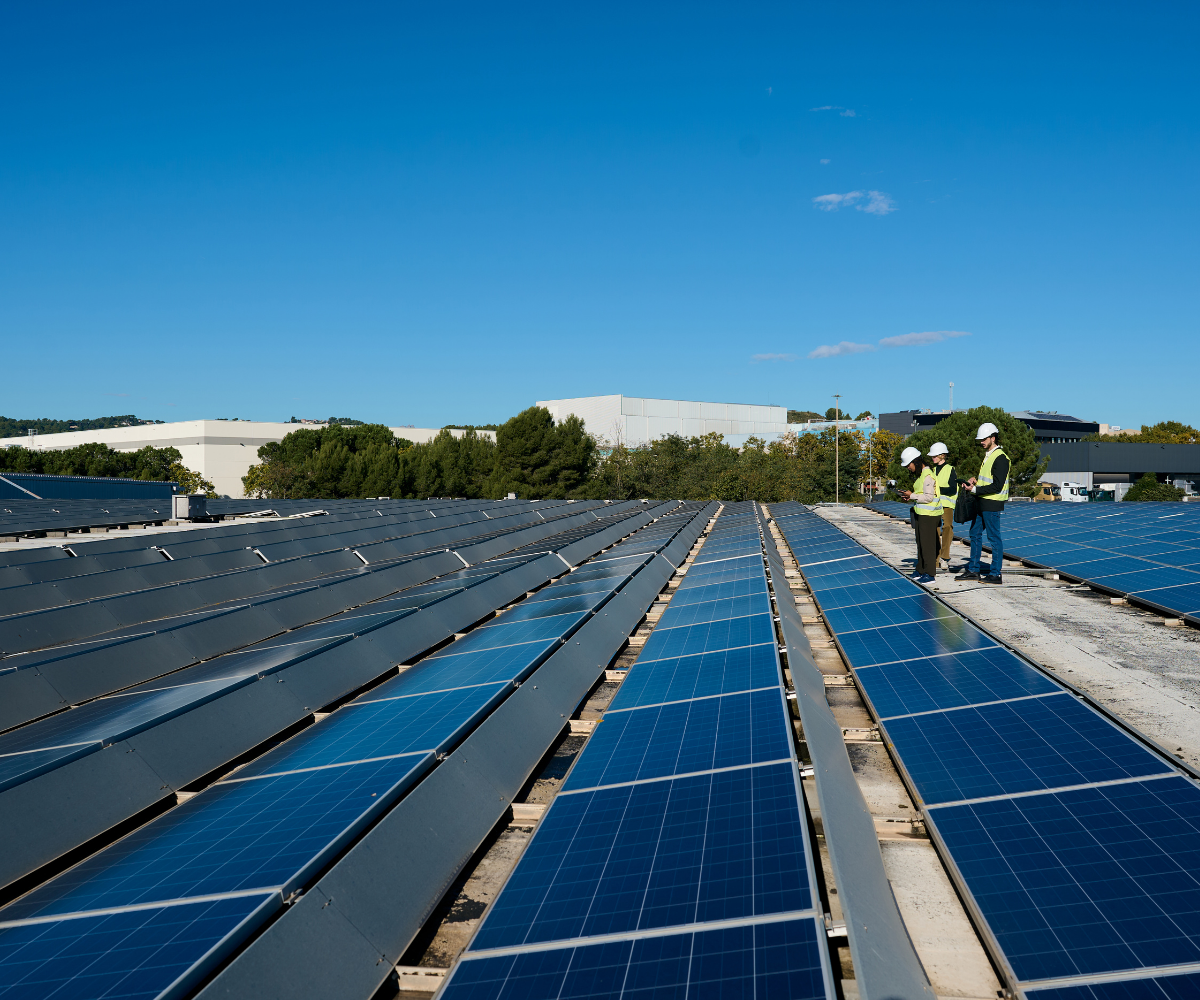
Solar panels can work really well on flat roofs when using the correct mounting system. Panels can easily be angled so they sit at the optimal tilt position for sun exposure.
Flat roofs use adjustable mounting brackets that angle the panels toward the sun for better energy generation, where pitched roofs are limited by the existing roof slope and direction.
Angled mounting systems are used for the majority of flat roof solar panel installations in the UK.
How Do Flat Roof Solar Panels Work?
Solar panels can’t lie flat on a roof, as they won’t generate power effectively. On flat roofs, installers use specialist brackets or frames to angle the solar panels uphill. In the UK, solar panels should typically tilt at an angle of around 30–35 degrees for optimal performance.
These systems can be attached to a roof in a number of ways:
- Ballasted – weighted mounts that don’t penetrate the roof surface
- Mechanical fix – brackets fastened directly into the roof’s structure
- A-Frame systems – supports specifically designed to angle panels towards the sun
An installer will recommend which mounting system is best suited to your roof depending on your roof material, strength, wind exposure and space available.
Benefits of Solar Panels on a Flat Roof
Flexible Panel Positioning
Solar panels on a flat roof offer the benefit of flexibility. Pitched roofs are limited by the existing roof angle and orientation but flat roofs give installers more leeway when it comes to panel positioning.
By angling panels correctly, flat roofs can produce great results all year round.
Easy Maintenance and Access
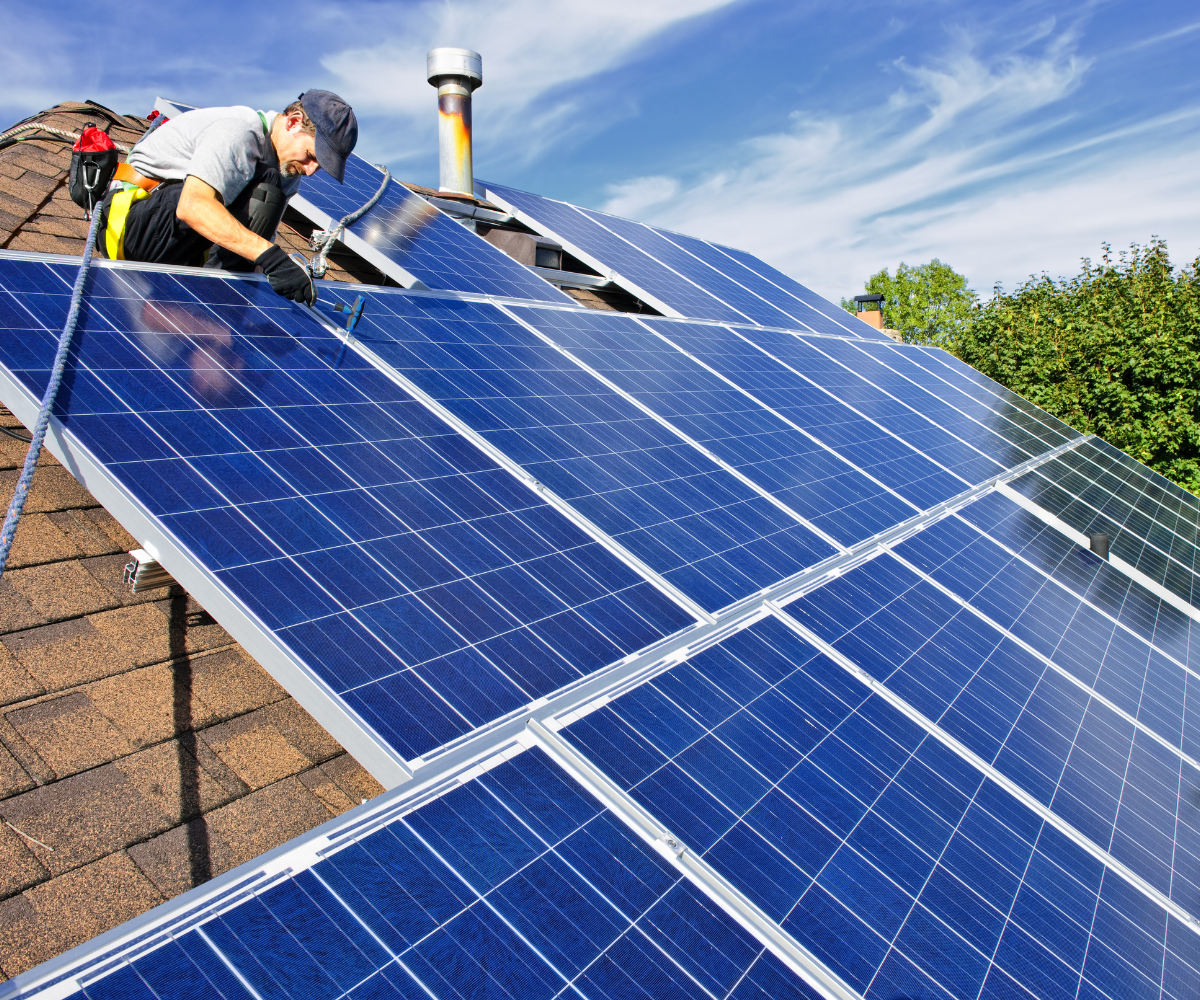
Roofs with a shallow incline are easier and safer for installers to access than very steep roofs. This can minimise installation time and simplify later maintenance visits, repairs and cleaning.
More Discreet Appearance
Solar panels on a flat roof will usually be mounted lower to the roofline than pitched roofs. This can give your solar panels a more discreet appearance from street level.
Commercial Properties
Large flat roofs on offices, warehouses, schools, and commercial units are often ideal for solar panel systems because they provide uninterrupted space for larger arrays.
Are There Any Drawbacks?
While solar panels installed on flat roofs have many advantages, there are some additional things to consider:
Mounting Costs
Flat roofs require a mounting system which can add to overall installation costs. However, as flat roofs are easier to access they may reduce labour costs.
Weight
Solar panels will add extra weight to your roof. Some flat roof mounts use ballast weights which add additional load. An engineer will need to asses whether your roof can support the extra weight and may recommend repairs before installing panels.
Panel Spacing
Solar panels on a flat roof usually need more space between each row to prevent shading from nearby rows. This reduces the total number of panels you can install compared to a pitched roof.
Wind Load
Flat roof solar panels are elevated on mounting frames which can make them more susceptible to wind. Professional installers will take wind exposure into consideration when selecting panels and mounting systems.
Do Solar Panels on Flat Roofs Need Planning Permission?
You won’t normally need planning permission for solar panels on a flat roof thanks to permitted development rights.
However, there are some exceptions including:
- Listed buildings
- Properties in conservation areas
- Properties in Areas of Outstanding Natural Beauty
- Certain restricted areas
As with all roof-mounted solar panels, you must follow rules regarding how high they can sit above roof level. In the UK, panels are allowed to be 0.6 metres higher than a flat roof surface.
Speak to a solar panel installer to check whether your property requires planning permission.
Is Your Flat Roof Suitable For Solar Panels?
Solar panels can be installed on most flat roofs. But there are several factors that need to be considered before installation:
Roof Maintenance
Older roofs may require repairs before solar panels can be installed. If your roof is nearing the end of its lifespan, it may be worth replacing your roof before installing solar.
Roof Condition
Solar panels shouldn’t be installed on a damaged or leaking roof. If your roof needs repairs or replacing, consider getting this completed before solar installation.
Materials
Different roof materials require different installation methods. Talk to your installer about your roof type and whether solar panels are suitable.
Are Flat Roof Solar Panels Worth It?
Yes, solar panels on a flat roof can still generate a decent amount of electricity and save you money on bills. Solar will help to lower your carbon footprint and reduce your dependency on grid supplied electricity.
Solar panels have never been more worthwhile with the current rising energy bills, they provide great long-term savings.
Interested in Flat Roof Solar Panels?
Eden Power Ltd offers solar panel installation services for homes and businesses. Our team can help you design a solar array suited to your flat roof, whether you have a residential extension or commercial unit.
Get in touch to find out more about our solar installations for flat roofs.